

Rated 4.9 on Google

Back to Blog
Whole-Home Generator vs. Battery Backup Systems for Maryland Homes
April 29, 2026
Maryland is a state where the weather keeps us on our toes. From the heavy, wet snow of an April upslope in the Piedmont to the tropical remnants that sweep across the Chesapeake Bay in autumn, our power grid is constantly under fire. In 2026, as severe storms become more frequent and the demand on our electrical infrastructure grows, homeowners in Annapolis, Severna Park, and Howard County are increasingly asking one vital question: What is the best way to keep the lights on?
At Chesapeake Electric, we have spent years fortifying Maryland homes against the unexpected. For decades, the standard answer was the standby generator. However, the rise of sophisticated battery storage technology has created a true “heavyweight” alternative. This guide breaks down the comparison between whole-home generators and battery backup systems, exploring the costs, technical requirements, and local Maryland incentives that will help you decide which system is the best fit for your family.
The Two Champions: How They Work
To understand which system is right for you, we must first look at the fundamental difference in how they deliver energy security.
The Whole-Home Standby Generator
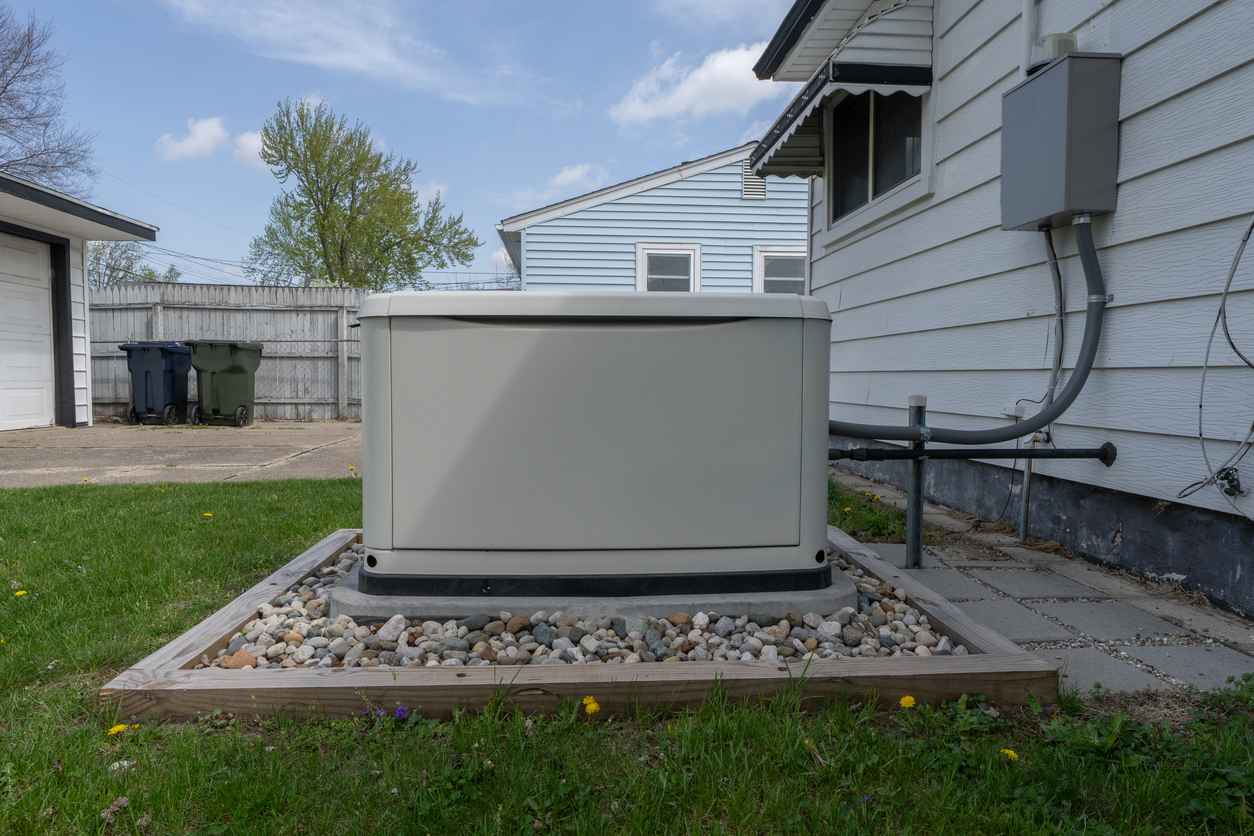
A standby generator is a stationary combustion engine installed on a concrete pad outside your home. It is hardwired into your service panel via an Automatic Transfer Switch (ATS).
- The Process: When the grid fails, the generator detects the loss of power, starts its engine, and begins producing electricity. In most cases, this transition takes between 10 and 30 seconds.
- The Fuel: These systems typically run on your home’s existing natural gas line or an on-site propane tank. This allows them to provide continuous power for as long as fuel is available.
The Battery Backup System
A battery backup, such as the Generac PWRcell or EcoFlow Smart Home Panel 3, is a solid-state energy storage solution. It is typically installed inside a garage, basement, or utility room.
- The Process: The battery remains constantly charged by the grid (or solar panels). When a blackout occurs, the system switches to battery power in less than 20 milliseconds. This is so fast that computers, Wi-Fi routers, and digital clocks do not even flicker.
- The Fuel: The fuel is stored electricity. Once the battery is drained, it must be recharged by the grid or a solar array.
Comparison 1: Runtime and Capacity
The most significant difference between the two systems is how they handle a long-term outage.
Whole-home generators are the undisputed kings of duration. If you have a natural gas line, a generator can theoretically run for weeks. This makes them the ideal choice for Maryland homeowners in more rural or wooded areas where storm damage can lead to multi-day outages. If you need to run high-draw appliances like a 4-ton central air conditioner, an electric range, and a pool pump all at once, a 22kW to 26kW generator is built for that exact workload.
Battery backup systems have a finite capacity. A standard 10kWh to 20kWh battery stack is designed to power your essentials, lights, refrigeration, sump pumps, and internet, for 12 to 24 hours. While you can stack multiple batteries to increase capacity, the primary goal of a battery is “surgical” backup. However, if you pair your battery with solar panels, you create a “self-healing” grid. During the day, the sun recharges the battery; at night, the battery powers the home. This cycle can last indefinitely on sunny days.
Comparison 2: The Historic District Challenge
In Annapolis and other historic Maryland districts, the decision often comes down to local regulations rather than technical specs.
A traditional standby generator requires a significant outdoor footprint, a visible exhaust pipe, and often a permit battle with a historic commission. The noise of a running engine (typically 65 to 70 decibels) can also be an issue in densely packed neighborhoods.
In contrast, battery systems like the EcoFlow series are a game-changer for historic homes. Because they can be installed entirely indoors, they have a zero-footprint exterior. They are virtually silent, meaning you can keep your critical circuits running during a midnight storm without disturbing your neighbors. At Chesapeake Electric, we specialize in these “invisible” installations that respect the architectural heritage of Maryland.
Comparison 3: 2026 Costs and Incentives
The financial landscape for backup power has shifted dramatically in 2026, thanks to new Maryland state programs and federal credits.
Upfront Investment
- Generators: A whole-home standby generator installation in Maryland typically ranges from $8,000 to $15,000, depending on the size and gas line requirements.
- Batteries: A whole-home battery system typically ranges from $12,000 to $20,000. While the equipment is more expensive, the installation is often simpler as it does not require gas plumbing.
2026 Incentives
Maryland is a national leader in energy storage incentives.
- RCES Program: As of February 2026, the residential Energy Storage (RCES) grant program offers significant support for battery installations.
- Federal Tax Credits: Under the Inflation Reduction Act, homeowners can claim a 30% tax credit on the total cost of a battery system, with no cap on the dollar amount.
- Peak Shaving: Unlike a generator, which only provides value when the power is out, a battery can save you money every day. Through “peak shaving,” the battery can power your home during high-rate hours (usually 4pm to 9pm), lowering your monthly BGE or Pepco bill.
Comparison 4: Maintenance and Reliability
Generators are mechanical engines. They require oil changes, spark plug replacements, and “exercise cycles” every week. If a generator is not maintained, it may fail to start when the actual emergency arrives. In Maryland’s humid climate, rust and moisture can also impact the external housing over time.
Batteries have zero moving parts. There is no oil to change and no fuel to store. They are solid-state devices with automatic firmware updates. Most modern Lithium Iron Phosphate (LFP) batteries come with a 10-to-15-year warranty and require no active maintenance from the homeowner.
The Hybrid Solution: The Best of Both Worlds
In 2026, many of our clients are choosing a hybrid approach. This involves installing a small battery system to handle the “nuisance” flickers and provide silent power for electronics, while maintaining a standby generator for the massive power draws and long-term security. This provides a 99.9% uptime rate, ensuring that no matter what the Maryland weather does, your home remains a sanctuary.
Which System Wins for You?
The choice between a generator and a battery comes down to your primary goal.
- Choose a standby generator if your priority is whole-home comfort (including AC and laundry) during multi-day outages and you have access to a natural gas line.
- Choose a battery backup if you value silent operation, instantaneous switching for sensitive electronics, daily energy savings, and a non-invasive installation that bypasses historic commission hurdles.
Empower your home against the Maryland weather. Contact Chesapeake Electric today to schedule your generator appointment and discover the perfect backup solution for your home!
Recent Posts
5 Electronics and Appliances You’ll Want Protected From Fall Power Surges
September 22, 2026
September 22, 2026

Are Your Walkways Too Dark? Fall Outdoor Lighting Tips for Maryland Homeowners
September 22, 2026
September 22, 2026
5 Signs Your Standby Generator Needs Service Before a Maryland Winter
September 22, 2026
September 22, 2026
Best Outdoor Lighting for Maryland Homes: A Guide to Landscape, Security, and Waterfront Lighting
August 31, 2026
August 31, 2026
Best Smart Home Upgrades for Maryland Homeowners: Where to Start
August 31, 2026
August 31, 2026
How Long Can a Whole-Home Generator Run During a Power Outage in Maryland?
August 31, 2026
August 31, 2026
Does Your Maryland Home Need a Service Panel Upgrade for an EV Charger?
July 30, 2026
July 30, 2026