

Rated 4.9 on Google

Back to Blog
When Electrical Repairs Turn Into Major System Upgrades
May 28, 2026
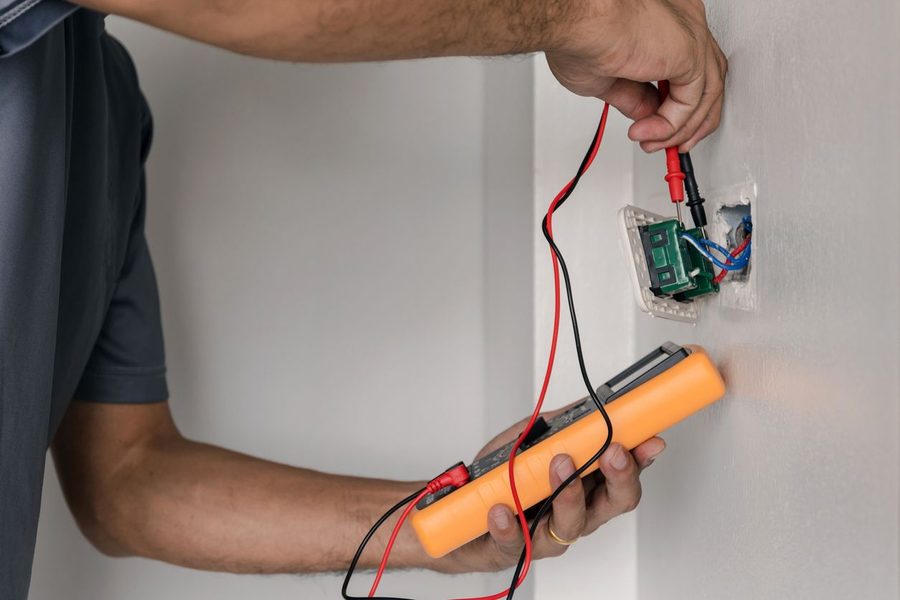
Every homeowner has experienced that brief moment of frustration when an everyday appliance stops working. You plug in your morning coffee maker or flip the switch on your bathroom hair dryer, and the power in the room cuts out instantly. You walk down to your utility closet or basement, locate your main electrical service panel, find the solitary circuit breaker that has flipped to the OFF position, and reset the switch with a quick snap. Power returns, and you move on with your day.
Initially, a frequently tripping breaker feels like a minor, isolated nuisance that should require a straightforward, low-cost electrical repair. You call a licensed contractor, expecting them to simply swap out a single faulty plastic switch or tighten a loose terminal screw.
However, when a professional master electrician opens your service cabinet and hooks up their digital diagnostic tools, they frequently uncover a far more complex structural story. What started as a simple request for a minor repair can quickly reveal that your entire home power grid is operating past its safe physical limitations.
At Chesapeake Electric, we believe in providing total honesty, operational transparency, and unmatched safety to our community across the Annapolis region. This guide explores the engineering mechanics of why basic electrical repairs can pull back the curtain on hidden structural vulnerabilities, and how our master technicians determine when your home requires a major system upgrade to protect your family from devastating fire and shock hazards.
The Hidden Catalyst: Changing Demands on an Aging Grid
To understand why a minor electrical symptom can escalate into a major system recommendation, you must look at how residential energy consumption has transformed over the last few decades. Maryland features a diverse and historic housing stock, with neighborhoods ranging from centuries-old Annapolis estates to mid-century suburban developments in Severna Park.
When these homes were originally constructed, their electrical networks were engineered to meet minimal, predictable power thresholds. A standard household fifty years ago only needed to distribute current to a few light bulbs, a refrigerator, a washing machine, and a television.
Today, that identical legacy infrastructure is forced to support an endless array of high-amperage, continuous modern loads. We power high-efficiency central climate control systems, multi-zone kitchen ranges, computers, smart home devices, and hot tubs simultaneously.
When you ask an older electrical system to manage modern power demands, it operates under extreme physical friction. A circuit breaker that keeps tripping is rarely a broken part; it is a vital safety device screaming that your current household demand has outpaced your home’s total infrastructure capacity.
Major Technical Triggers: How Electricians Evaluate Your Panel
When a technician from Chesapeake Electric arrives at your home to diagnose a flickering light or a dead outlet, they follow precise safety evaluation protocols. There are several critical structural indicators that immediately turn a basic repair path into a mandatory system upgrade.
1. The Presence of Condemned Legacy Brands
If our team pulls the front cover off your service panel and discovers specific obsolete brand names, a standard repair is no longer a legal or safe option.
-
Federal Pacific Electric (FPE) Stab-Lok Panels: Popular throughout mid-century construction, these panels feature a catastrophic internal design flaw where the circuit breakers routinely jam and completely fail to trip during a genuine short circuit or overcurrent event.
-
Zinsco and Sylvania Panels: These boxes utilize an aluminum bus bar framework that oxidizes rapidly under routine electrical loads. This oxidation creates high resistance, generating intense localized heat that can literally melt the plastic breaker casings directly to the metal core.
Because these units represent an immediate structural fire hazard and have been condemned by national safety organizations, a licensed electrician cannot ethically service or replace individual components within them. The only code-compliant path forward is a full system replacement.
2. Advanced Bus Bar Degradation and Arcing Damage
During a repair inspection, we look closely at the central metal bus bars, which are the main power tracks that individual circuit breakers snap onto.
If we detect dark carbon scorching, physical pitting on the metal faces, or melted wire insulation, your system has experienced an active electrical arc. Arcing occurs when electricity leaps through open air gaps between loose connections, creating temperatures that can easily exceed thousands of degrees behind your drywall. Once the structural integrity of a panel’s main bus bar has been compromised by heat warping, it loses its ability to insulate current safely, meaning a localized repair is no longer viable.
3. Widespread Moisture Corrosion from Salt Air
Our coastal proximity to the Chesapeake Bay and local river basins subjects Annapolis area homes to high atmospheric humidity and salt-laden air. If an electrical panel is located in an unconditioned basement, a damp garage, or on an exterior stucco wall, moisture can seep inside the enclosure over time.
Water reacts with copper and aluminum terminals to create a layer of crusty green or white rust. This oxidation acts as a heavy barrier to the clean flow of electricity. It forces your system to run under intense mechanical friction, creating hot spots that can destroy appliances and trigger sudden power dropouts. If this corrosion has migrated into your main service lugs, attempting to replace a single breaker will not fix the underlying systemic decay.
Future-Proofing vs. Temporary Patching: The Financial Math
While a major system upgrade requires a greater upfront capital investment than a targeted repair, it delivers profound long-term economic and structural value to a household.
Many older Maryland homes operate on legacy 60-amp or 100-amp electrical main capacities. Upgrading to a modern, code-compliant 200-amp service panel entirely replaces your home’s aging electrical nerve center.
It provides an expanded physical cabinet size with plenty of open slots, allowing air to circulate around components more effectively to reduce internal heat buildup during hot summer months. Furthermore, a 200-amp upgrade delivers the essential electrical infrastructure required to safely integrate high-value modern technologies that no basic repair can accommodate, such as:
-
Level 2 Electric Vehicle (EV) Charging Stations: A dedicated EV charger requires a robust 40-amp to 60-amp circuit, which can effortlessly overwhelm an entire older 100-amp panel framework on its own.
-
Whole-Home Standby Generator Networks: Integrating an automated emergency backup power grid requires a modern panel configuration paired with a code-compliant automatic transfer switch to keep your household safe during severe coastal storms.
-
Modern Heat Pump and Central AC Systems: Upgrading your primary climate control units to variable-speed systems requires clean, uncompromised, and stable electrical delivery lines.
Restoring Harmony to Your Living Space
Your residential electrical panel works tirelessly every single second of the day and night to keep your home comfortable, functional, and safe. Recognizing that an ongoing plumbing-style symptom like a blinking light, a buzzing switch, or a frequently tripping circuit breaker is often a vital indicator of a deeper infrastructure issue allows you to take proactive control of your home asset. Whether your property is best served by a targeted component tune-up or a modern 200-amp service panel overhaul, addressing the issue early protects your budget, expands your system capability, and delivers total safety for years to come.
Don’t wait for a dangerous power blackout or a sudden electrical emergency to discover the true condition of your home power grid. Contact Chesapeake Electric today to schedule a professional electrical safety inspection and full system audit with our local team of certified experts. Let our award-winning family deliver the reliable, high-quality, and honest craftsmanship your Maryland household deserves through every season.
Recent Posts

Best Outdoor Lighting for Maryland Homes: A Guide to Landscape, Security, and Waterfront Lighting
August 31, 2026
August 31, 2026
Best Smart Home Upgrades for Maryland Homeowners: Where to Start
August 31, 2026
August 31, 2026
How Long Can a Whole-Home Generator Run During a Power Outage in Maryland?
August 31, 2026
August 31, 2026
Does Your Maryland Home Need a Service Panel Upgrade for an EV Charger?
July 30, 2026
July 30, 2026

Coastal Humidity & Energy Bills: Smart Home Automation for Maryland Homes
July 29, 2026
July 29, 2026
Navigating Chesapeake Bay Tides: Code-Compliant Pier Power Installation in Maryland
July 29, 2026
July 29, 2026
Smart Electrical Panels vs. Traditional Panels: Are They Worth the Upgrade?
June 18, 2026
June 18, 2026